Bathtub Overflow Accident at the Rental House
What Are You Going ThroughThe Bathtub Overflow Accident at the Rental House is a practical disaster that breaks into the narrator and her friend’s preparations for the friend’s planned death. While the narrator is out grocery shopping, her exhausted friend lies down as a bath fills and is later found dazed and shivering amid the water. The accident makes their vulnerability material: there is a soaked house to explain, an insurer to contact, and no way to make the damage disappear as if it had never happened.
Circumstances and Discovery
The accident begins with an ordinary attempt at relief. Even on scorching days, the friend often suffered from chills; on this particular afternoon, she was also more fatigued than usual. She decided to take a hot bath, then lay down to wait for the tub to fill. The narrator was at the supermarket, a routine errand she usually handled alone. The friend’s interest in food had diminished, supermarket smells could nauseate her, and the store’s cold and scale exhausted her. Grocery shopping had already become one of the narrator’s recurring tasks, but the accident gives that absence an immediate consequence: she is away when the bath overflows.
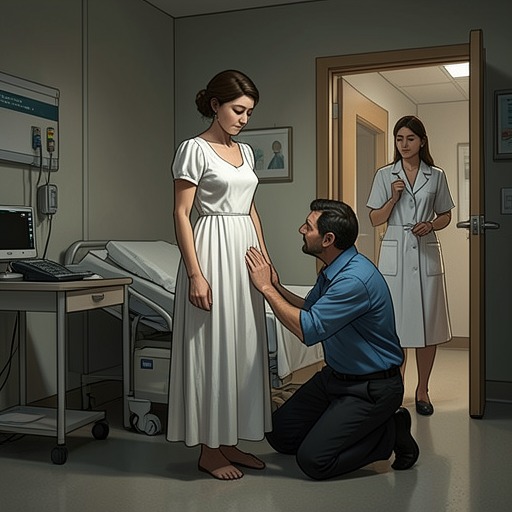
Returning to the room, the narrator sloshes across to the bed, where her friend sits hugging her knees, dazed and shivering. Her teeth are chattering. The image of someone adrift after a shipwreck gives the domestic mishap the force of a bodily emergency, while the narrator’s wet feet bring the flood directly into the scene. The narrator climbs onto the bed and tucks her feet beneath her. For a moment, the two women are together in the aftermath, both figured as people adrift. The scene does not present the accident as a mere inconvenience: it leaves the friend cold and disoriented, and the narrator suddenly responsible for responding to both her distress and the damage around them.
Damage, Responsibility, and the Fantasy of Repair
As the narrator sits trying to comfort her friend, she also has to consider what must be done. Their hosts need to be told, and the hosts will need to contact their home insurer immediately. The narrator experiences that obligation as hateful, but not as something that can be postponed. Care here is inseparable from logistics: soothing her friend does not remove the duty to explain the damage or arrange for the house to be assessed.
At the same time, the narrator’s mind reaches for an image of effortless restoration. She remembers a television commercial in which a couple watches water burst through their ceiling from an overflowing upstairs bathtub. A smiling team arrives, cleans and repairs the house, and leaves the homeowners unaware that anything was wrong. The narrator has also seen the company’s cleanup trucks, but in the immediate aftermath it is the commercial’s fairy-tale ending that occupies her thoughts. Its promise of a home made good as new offers a momentary refuge from the mess and the obligation to face it. That fantasy is sharply unlike their situation: no crew has appeared, the hosts must be informed, and the people in the flooded house cannot simply be released from awareness of the event.
The friend, meanwhile, turns against the decision to come to the rental house. She calls the trip a mistake, a foolish idea and a fantasy that has gone wrong; she says it is unfair, and then cries out that she has never been so unhappy and hates herself. The overflow therefore occurs within a larger emotional crisis rather than as an isolated mishap. It intensifies the sense that the plan has failed, even though the friend’s distress cannot be reduced to the flood alone. The narrator’s attention is divided between the practical next step and the friend’s anger and despair.
The Hosts’ Response and the Move Back
When the narrator later speaks with the owner, he places the flooded house in a wider history of loss. He and his wife, he says, have lived a long time and are no strangers to tragedy: one of their children died of meningitis as a small child, and they have experienced other deaths and serious illnesses. A flooded house, in his estimation, is not the worst thing that can happen. Renting out the home entails risk, and they have insurance. He also remarks that it is fortunate the overflowing bath was not upstairs, where the damage would have been worse. His response gives the narrator a perspective the commercial could not: the damage is real, but it can be met without treating it as the worst possible calamity.
The accident is followed by the move back to the friend’s apartment. There, the narrator again unpacks, takes on grocery shopping and errands, and assumes the housecleaning that had been done weekly before the friend left. The apartment feels small after the rental house, though the narrator has her own room. Ordinary cleaning becomes difficult for the friend: vacuum noise and disinfectant smell are intolerable, and her skin has become so sensitive that even silk can rub it raw. Yet she insists that the narrator clean the pigeon-stained bedroom window, and they decide she should wash the others too. The return home does not erase the accident or restore ease; it relocates their routines into a space shaped by the friend’s increasingly narrow physical tolerances. The friend is glad to be home and continues to regard the trip as a mistake for which she has been punished.
Narrative Significance
The accident turns the friend’s anticipated end into a scene of interruption and dependence. The two women had to reckon with the possibility of the friend’s death, but the flooded bath demands immediate attention to a different kind of vulnerability: fatigue, chills, disorientation, wet rooms, and obligations to the people who own the house. The narrator’s response moves between intimate comfort and practical responsibility, without either one resolving the other.
The commercial’s immaculate restoration supplies a counterimage to the accident’s actual aftermath. Its cheerful crew can make a disaster appear never to have happened; the narrator and her friend must instead live through the embarrassment, explanation, and change of plans. The owner’s account of bereavement and illness further complicates the narrator’s fear of causing harm: the flood matters, but it sits within a world where grief and misfortune are not neatly repaired. The episode’s importance lies in that collision of scales. A bath overflowing is a domestic mishap, yet in this house it exposes how little control either woman has over the conditions surrounding their effort to prepare for death.